Event model
For each trigger, specify the source, destination, timestamp, operator view, acknowledgment and action. Define behavior when either platform is unavailable.

Connect separate technologies around the events and decisions that matter to the facility.
Greater Denver and the Front Range
Products, interfaces and exact scope are confirmed after reviewing the facility.
We define the event, recipient, action and fallback before connecting platforms. Compatibility, cybersecurity and ownership are part of the design review.
For each workflow, define the initiating event, the receiving system, the operator action and a failure mode. Test events across platform boundaries, including clock alignment, permission changes and alerts that arrive when a network connection is down.
Commissioning uses real scenarios; documentation records the intended behavior and support contacts.
We confirm existing conditions and customer responsibilities before finalizing products, interfaces, tests and the documentation needed to support the installed system.
A useful design connects components, people, failure conditions and a testable handoff.
For each trigger, specify the source, destination, timestamp, operator view, acknowledgment and action. Define behavior when either platform is unavailable.
Link a door forced or held event to a usable camera view and an authorized recipient; test that the clip and event times align.
Plan who creates users, how credentials are revoked, how service accounts are protected, and which administrator can change an integration.
Exercise normal and failure scenarios with the customer, verify audit logs, and document software versions, support ownership and change procedures.
Five possible applications to explore during discovery. These describe capabilities and design scenarios, not completed customer projects.
Pair a forced-door event with the camera view an operator needs to assess it.
Route an intrusion event to the agreed monitoring and on-call workflow.
Connect visitor approval to a time-limited credential and a documented escort policy.
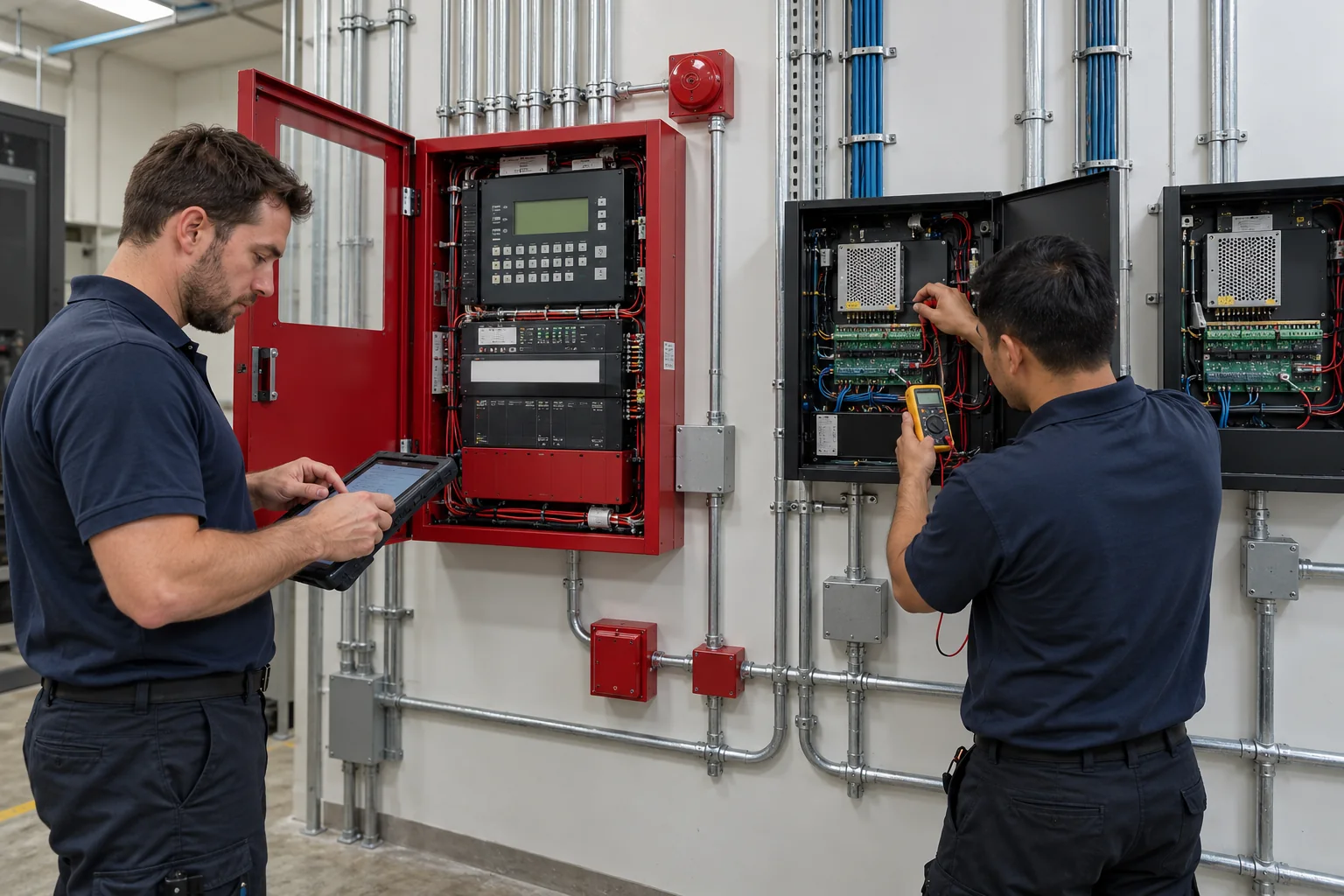
Coordinate a fire alarm interface with door hardware and the approved egress sequence.
Test how a network or power failure affects related systems and their restoration.
Representative equipment and working environments relevant to the scope.

Our pre-site safety review, field documentation and customer acceptance process help keep the installed condition visible to the people who will operate and maintain it. For system integration, the closeout conversation should include: Exercise normal and failure scenarios with the customer, verify audit logs, and document software versions, support ownership and change procedures.
We ask for the existing drawings, device inventory, network and power ownership, known deficiencies and the people who will use the system. The final scope and acceptance criteria follow those answers.
| Decision | What to confirm |
|---|---|
| Scope | Confirm the devices, areas and operating modes included in the work; record exclusions. |
| Dependencies | For each workflow, define the initiating event, the receiving system, the operator action and a failure mode. Test events across platform boundaries, including clock alignment, permission changes and alerts that arrive when a network connection is down. |
| Handoff evidence | Exercise normal and failure scenarios with the customer, verify audit logs, and document software versions, support ownership and change procedures. |
Have a building in Colorado? 1st Key stands ready and able to help. Tell us the location and what needs attention; we will confirm service availability and scope.
Describe the facility, the existing equipment and the outcome you need. We can discuss design, deployment or service.