Pre-task planning and stop-work decisions
Recognizing changing conditions, reviewing the day’s scope, identifying nearby trades and raising a concern before work continues.
The field discussion considers who owns the hazard, when the crew pauses, and which site-specific procedure or qualified person controls the next step.
Ladders, lifts and work at height
Ladder selection and inspection, stable setup, overhead exposure and the role-specific requirements for lifts and fall protection.
The field discussion considers who owns the hazard, when the crew pauses, and which site-specific procedure or qualified person controls the next step.
Electrical and stored-energy awareness
Recognizing energized equipment, coordinating isolation and lockout/tagout responsibilities, and respecting the limits of individual qualifications.
The field discussion considers who owns the hazard, when the crew pauses, and which site-specific procedure or qualified person controls the next step.
Tools, drilling and cable installation
Inspecting tools, controlling work areas, checking concealed-service risks and maintaining safe cable-pulling and overhead-work practices.
The field discussion considers who owns the hazard, when the crew pauses, and which site-specific procedure or qualified person controls the next step.
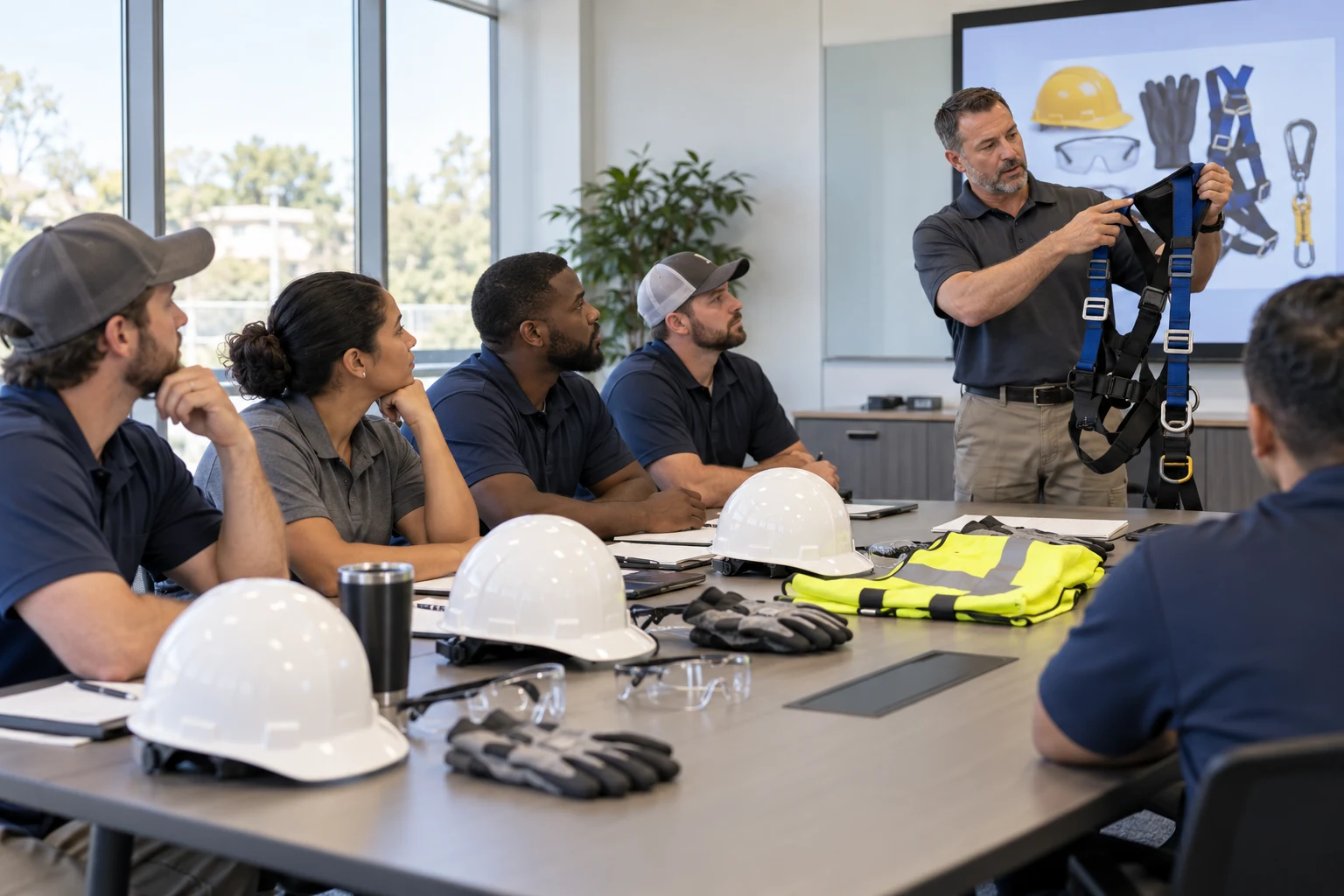
Personal protective equipment
Task-appropriate eye, hand, hearing and head protection; inspecting equipment and understanding where specialized protection requires additional qualification.
The field discussion considers who owns the hazard, when the crew pauses, and which site-specific procedure or qualified person controls the next step.
Occupied-building protection
Keeping exits and public routes clear, controlling trip hazards, protecting customer spaces and coordinating noise, dust and temporary barriers.
The field discussion considers who owns the hazard, when the crew pauses, and which site-specific procedure or qualified person controls the next step.
Material handling and ergonomics
Planning equipment moves, team lifts, rack work, awkward overhead tasks and repetitive work to reduce avoidable strain.
The field discussion considers who owns the hazard, when the crew pauses, and which site-specific procedure or qualified person controls the next step.
Hazard communication and material awareness
Reading labels and safety data sheets; recognizing suspect asbestos, lead and other materials and escalating before disturbing them.
The field discussion considers who owns the hazard, when the crew pauses, and which site-specific procedure or qualified person controls the next step.
Driving, backing and loading
Vehicle readiness, load security, pedestrian awareness and coordinating work near loading docks, parking areas and moving equipment.
The field discussion considers who owns the hazard, when the crew pauses, and which site-specific procedure or qualified person controls the next step.
Colorado weather and outdoor work
Heat, cold, hydration, winter walking surfaces and weather changes that affect rooftop, exterior and travel activities.
The field discussion considers who owns the hazard, when the crew pauses, and which site-specific procedure or qualified person controls the next step.
Emergency response and incident reporting
Knowing the site’s emergency contacts and assembly arrangements, promptly reporting incidents and near misses, and understanding first-aid response boundaries.
The field discussion considers who owns the hazard, when the crew pauses, and which site-specific procedure or qualified person controls the next step.
Battery, UPS and equipment-room hazards
Recognizing stored energy, battery handling concerns, restricted clearances, heat and housekeeping risks around technology equipment.
The field discussion considers who owns the hazard, when the crew pauses, and which site-specific procedure or qualified person controls the next step.
Restricted spaces and unfamiliar hazards
Recognizing confined-space or other restricted-work conditions and stopping for qualified evaluation instead of treating unfamiliar areas as routine access.
The field discussion considers who owns the hazard, when the crew pauses, and which site-specific procedure or qualified person controls the next step.
Fatigue, communication and working alone
Checking in, establishing escalation contacts and recognizing when fatigue or changing conditions call for a different work plan.
The field discussion considers who owns the hazard, when the crew pauses, and which site-specific procedure or qualified person controls the next step.